
© 2026 Boabo Webstudio – All rights reserved.
ICO Data Protection Certified.
© 2026 Boabo Webstudio – All rights reserved.
ICO Data Protection Certified.
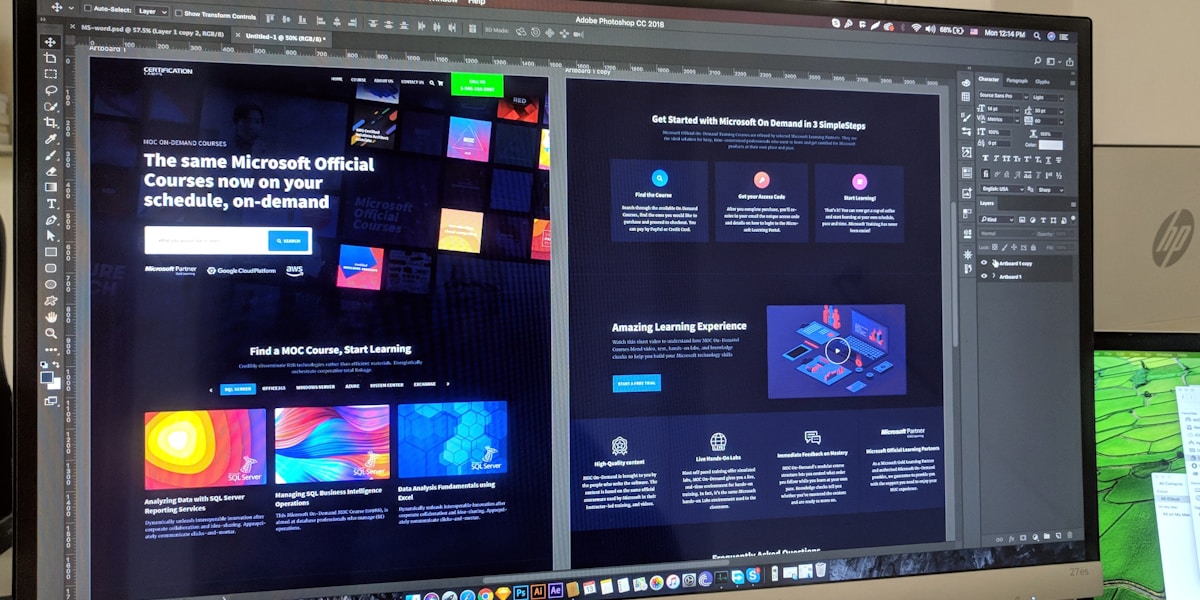
Not every website needs to be built from scratch. The no-code revolution has made it possible for businesses of all sizes to go from idea to live site in a matter of days — without writing a single line of code. And for a growing number of use cases, that is exactly the right approach.
At Boabo Webstudio, we build both custom-coded and rapid websites. This article is our honest take on when no-code platforms are the smarter choice — and how to get the most out of them.
Rapid websites are sites built using visual, no-code or low-code platforms that handle the technical heavy lifting behind the scenes. Instead of writing HTML, CSS and JavaScript by hand, you work with a visual editor that compiles your design into a live, hosted website.
The platforms we use and recommend most often include Framer — a design-first platform that produces polished, animation-rich sites with excellent performance; Wix — one of the most mature builders, ideal for small businesses that need integrated booking, e-commerce or membership features out of the box; and Webnode — a lightweight, multilingual builder that's perfect for simple brochure sites and personal portfolios.
Each platform has its strengths, and part of our job is matching the right tool to the right project.
This is the single biggest advantage of the no-code route. A custom-coded website typically takes 4–8 weeks from brief to launch. A rapid website? We regularly deliver polished, responsive sites in 3–7 business days.
That speed matters when you're launching a new product, running a time-sensitive campaign, or simply need an online presence before a trade show next week. In those scenarios, "perfect" is the enemy of "live and working."
The visual editing workflow also means revisions happen in real-time. You see changes instantly, approve them on the spot, and launch the same day. No staging servers, no deployment pipelines, no waiting for a developer to push code.
A professionally designed rapid website typically costs a fraction of a custom-coded project — often 40–70% less. That's not because the quality is lower; it's because the tooling does much of the engineering work automatically.
For startups, freelancers and small businesses operating on tight budgets, this changes the equation entirely. Instead of choosing between an expensive custom site and a DIY disaster, you get a professionally designed, mobile-responsive site at a price point that makes sense for your stage of growth.
Ongoing costs are predictable too. Most platforms charge a flat monthly fee that includes hosting, SSL, basic analytics and customer support — no surprise invoices for server maintenance or security patches.
Rapid websites are the right fit in more situations than most developers like to admit. Here are the scenarios where we actively recommend them to clients:
No-code platforms are not without trade-offs, and it's important to go in with clear expectations.
Performance. Builder-generated code is heavier than hand-written code. While platforms like Framer have made huge strides in optimising output, a custom-coded site will almost always load faster and score higher on Core Web Vitals.
Customisation ceilings. Every platform has boundaries. If your design requires a complex interactive data visualisation, a custom checkout flow, or deep third-party API integrations, you'll hit walls that no amount of plugin-hunting can solve.
Scalability. A five-page brochure site on Framer scales beautifully. A 500-page content hub with dynamic filtering, user accounts and real-time data does not. As your site's complexity grows, so does the case for custom code.
Platform dependency. Your site lives on someone else's infrastructure. If the platform changes its pricing, deprecates a feature, or goes offline, you're affected. Custom code on your own hosting gives you full control.
Choosing between custom and rapid isn't about which is "better" — it's about which is better for your situation right now. Here's a simple framework we use with clients:
| Factor | Choose Rapid | Choose Custom |
|---|---|---|
| Timeline | Days to 1–2 weeks | 4–8+ weeks acceptable |
| Budget | Under £2,000 | £3,000+ |
| Complexity | 1–10 pages, standard layouts | Complex interactions, integrations |
| SEO priority | Nice-to-have | Mission-critical |
| Lifespan | Months to 1–2 years | 3–5+ years |
| Brand uniqueness | Professional but templated | Fully bespoke identity |
Many of our clients start with a rapid website, validate their market, then graduate to a custom-coded site when they've outgrown the platform. That's not a failure — it's a smart growth strategy.
The no-code movement isn't a threat to custom development — it's a complement. Rapid websites make professional web presence accessible to businesses that couldn't justify a full custom build, and they give established companies a fast lane for campaigns, experiments and secondary properties.
The question is never "custom or no-code?" It's "which one, right now, for this specific goal?" And the answer is different for every project.
Tell us about your project and we'll recommend the best approach — rapid, custom, or a phased combination of both.
View our services